
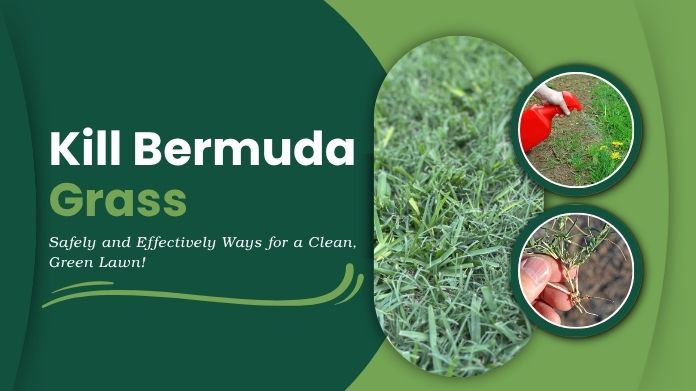
Bermuda grass has a knack for invading lawns and flower beds, complicating life for homeowners trying to keep their grass in perfect condition.
Okay, it can survive harsh weather and withstand drought, but when its roots extend into the outside beds, driveways, and especially the vegetable gardens, it easily becomes the villain– the uninvited, in this case, notorious for its endless march.
Most homeowners have to wrestle this grass in a completely one-sided battle. Its frustratingly quick return has led many to believe that no matter how hard they try to kill Bermuda grass, it always finds a way back.
The complete removal of Bermuda grass may be time-consuming and require a planned approach, but on the bright side, eliminating it can be done via either natural or chemical processes, depending on the circumstance.
Table of Contents
Understanding Bermuda Grass Before You Try to Kill It
Most homeowners try to understand how to remove infected grass before spending money on a herbicide or digging for hours.
Bermuda grass has a unique and rapid dispersion system that works in three ways. It can spring from.
- Rhizomes: Underground stems that send up new shoots.
- Stolons: Surface runners that creep across the soil.
- Seeds: Seeds sprout or germinate after remaining dormant for some time.
It would not take much to encourage it to regrow after even the smallest fragments are left behind; hence, it is very difficult to kill Bermuda grass completely.
There is also the timing factor; this is during active growing time, in late spring to summer, which are the months Bermuda grass becomes vulnerable, and your control methods are more effective.
Chemical Methods to Kill Bermuda Grass
1. Using Glyphosate (Roundup) Effectively
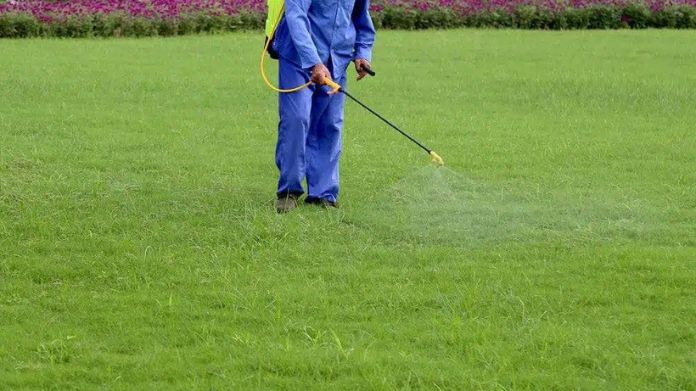 Using a ready-to-use pesticide that contains glyphosate (such as Roundup) to remove Bermuda grass is recommended.
Water the grass thoroughly for approximately ten days before spraying, then spray weeds evenly on bare soil in case of no wind.
Wait until the lawn turns brown and then eliminate dead foliage before removing any dead plants. Learn how to use it correctly.
- Apply and mowing the area a few days before application to encourage growth.
- Ensure that you spray on an even, non-drooping day.
- The grass turns brown, and then discard the dead sod.
- Water again to encourage any surviving roots to sprout, then re-spray.
2. Selective Herbicides for Flower Beds
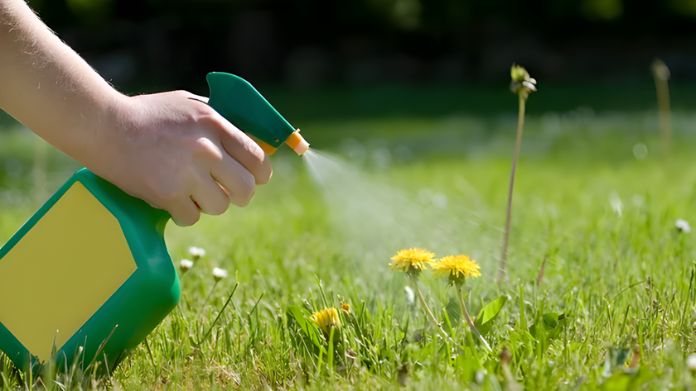 When in a flower garden, at least there is a view of Bermuda grass. You could stay organic by digging it out/hand-pulling it, spray it carefully with a non-selective herbicide, or using a selective herbicide to kill Bermuda grass.
Selective herbicides have an additional advantage-they kill Bermuda grass only. Good examples are fluazifop-P-butyl and sethoxydim. Since it takes more than one spray, you will have to repeat the process in a week’s time.
Organic and Natural Ways to Kill Bermuda Grass
If you prefer a more eco-friendly route, there are several natural ways to stop Bermuda grass, though they require more patience.
1. Smothering with Newspaper or Cardboard
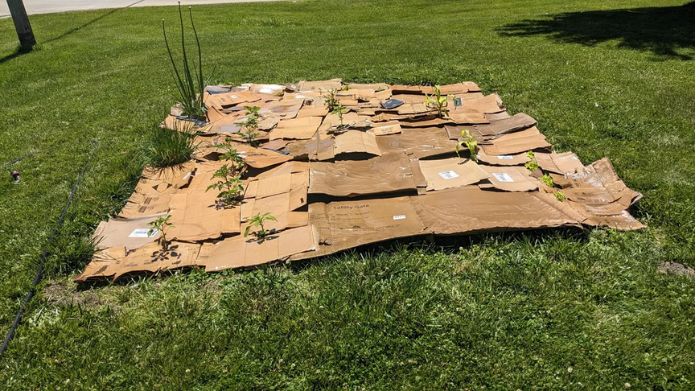 This old-school method works surprisingly well:
- Mow the grass short and flatten the area.
- Lay down 10 layers of newspaper or cardboard.
- Cover it with about 6 inches of mulch or compost.
- Wait a few months; no light or air means no growth.
It’s perfect if you’re preparing a new flower or vegetable bed.
2. Solarization: Killing with Heat
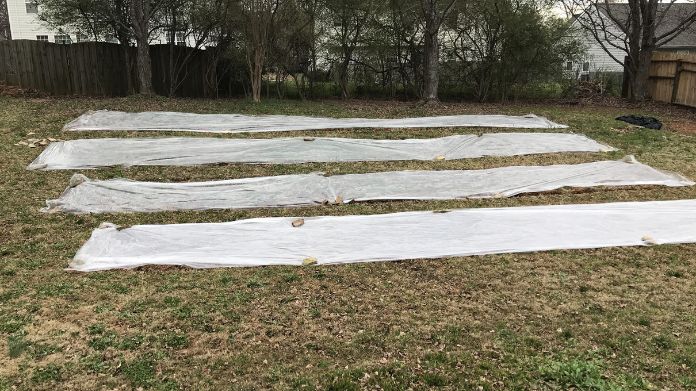 For those living in sunny areas, solarization can work wonders.
Cover the affected area with clear plastic sheeting during hot months, sealing the edges tightly. The trapped heat often reaching over 140°F “cooks” the grass, roots, and seeds over 6–8 weeks.
3. Natural Killers: Vinegar, Boiling Water, and Mulching
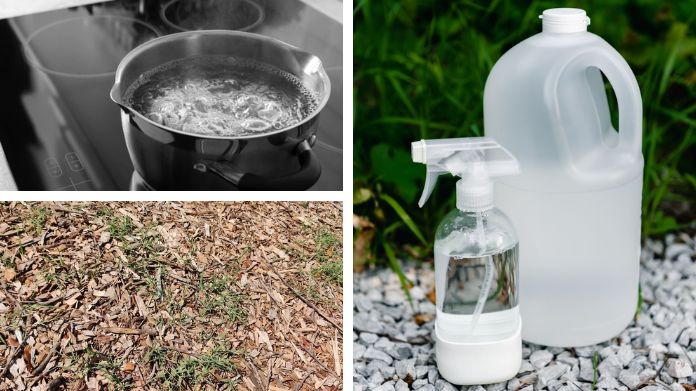
- Vinegar solution – Mix with a soap and water. This will cause the leaves to die off, but it will not get to the roots and will only be useful for a very small patch.
- Boiling water – Not useful for large yards, only works for cracks in the sidewalk and driveways.
- Sheet mulching – This is smothering with the addition of organic layers which is compost and straw. This is great for long-term control.
Manual and Mechanical Methods
1. Digging or Fork-and-Pull Method
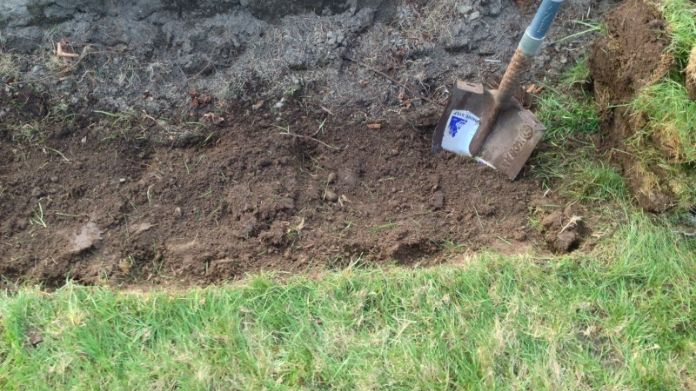 Patience and sweat are virtues, but manual removal can be quite effective when practiced.
- Mow down Bermuda grass so that you can see what you’re doing.
- Dig out Bermuda wherever you see it using a hand trowel.
- Be sure you dig deep enough to remove it all the way to the root system.
- Calmly pull out the entire root system.
- Work on soil that is moist, so the roots will come out easily.
- Make another visit after a week, so you can dig out the sprouts starting from the new root system.
Time-consuming, but once you’re able to get all the roots, you’ve won a long battle.
2. Raking and Re-Seeding
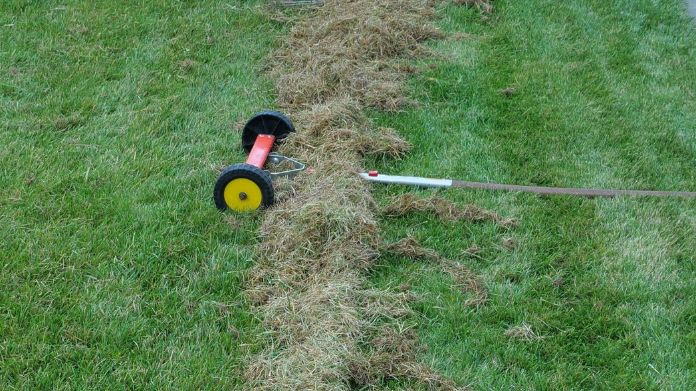 If Bermuda grass has only invaded small areas of your lawn, rake out the visible stolons and re-seed with your preferred grass type. This helps your desirable grass reclaim space before Bermuda can return.
Preventing Bermuda Grass from Returning
You’ll want to prevent it from returning once you win the fight.
- Disclose obstacles: Position edging that is 6 inches deep around beds or walkways to exclude underground runners.
- Use mulch: A thick layer of mulch is beneficial for suppressing the growth and development process of new seedlings.
- Maintain healthy turf: High (3–3.5 inches) mowing and deep watering with less frequency are key to maintaining healthy turf.
Choosing the Best Way to Kill Bermuda Grass
There are advantages and disadvantages to each approach:.
- Chemical: Fast-moving yet highly effective chemical. But not environmentally friendly.
- Organic: Safe and sustainable, albeit with slower production.
- Manual: Prolonged but thorough and enduring practice….
The most effective approach is usually to combine methods, such as digging and solarization.
Final Words
Killing Bermuda grass is not a one-time event; it is a process that requires perseverance, patience, and consistency.
Whether you go natural, use herbicides, or combine the two, the objective is to keep regrowth under control and prevent it from spreading again.
With the appropriate strategy and a little work, you can recover your lawn or garden from this obstinate invader and enjoy a landscape that is healthy, green, and entirely your own.

